What does lost and found mean in a hotel?
Lost and found means two things. It is the place where found items are kept. It is also the routine your team follows when they find something.
Guests leave things behind all the time. Phone chargers, sunglasses, swimwear, books and toys are the most common. Now and then it is something important, like a passport, a laptop or medicine.
Most items are found by the cleaning team while they prepare the room. That is why lost and found sits close to housekeeping. If you are new to that side of the work, our guide on what housekeeping is (opens in new tab) explains the basics.
Why it matters for a small property
At a large hotel, a security team handles lost items. At a small property, the owner or one manager usually does. That means:
- Trust. Guests judge you by how you treat their things.
- Reviews. "They found my ring and posted it to me" is a lovely review to get.
- Protecting your team. A clear process protects honest staff from blame.
Step 1: Find and report the item
Make it a rule. Whoever finds an item reports it the same day, before their shift ends. Not tomorrow, not "when I see the manager."
Tell your cleaners where to look. Guests often leave items in the same places:
- Under the pillows and in the bed sheets.
- In the bedside drawer.
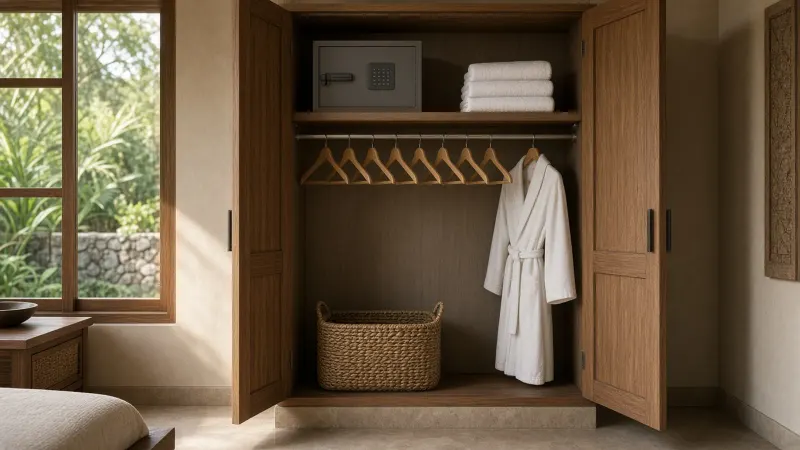
- In the safe box.
- Behind the bathroom door, on a hook.
- On the charger by the wall plug.
- By the pool or in the garden.
- In the fridge, for villas with kitchens.
When cleaners finish a room, they look in these places before they mark the room as clean. Our guide to hotel room status codes (opens in new tab) explains how rooms move from dirty to clean to ready.
Step 2: Record the item
Write every item down in one place. A notebook works. A shared spreadsheet works better, because more than one person can see it.
Record these details for each item:
| Detail | Example (made up) |
|---|
| Date and time found | 14 March, 11:20 |
| Where found | Villa 2, bedside drawer |
| Found by | Cleaner name |
| Description | Black phone charger, USB-C |
| Guest and booking | Guest name and booking number |
| Stored where | Lost and found box, shelf B |
| Status | Waiting, guest told, sent, collected, donated |
Describe the item plainly, but do not list everything inside a bag or wallet in a public place. Keep valuable details private. Take one photo of the item. It helps the guest confirm it is theirs.
Match the item to the guest
Check who stayed in that room last. Usually it is the guest who just checked out. Sometimes it may be an earlier guest, if the item was in a hidden spot. Your booking calendar shows who stayed in which room and on what dates.
If two guests could own the item, contact both, but do not tell either one exactly what you found. Ask each guest to describe what they lost. Only the real owner will describe it correctly.
Step 3: Store items safely
Keep found items in one locked place. A cupboard or a box with a lock is enough for most small properties.
Sort items into three groups:
- Valuable items. Passports, money, jewellery, phones, laptops. Lock these away, ideally in a safe. Only the owner or manager holds the key.
- Normal items. Clothes, chargers, books, toys. A labelled box on a shelf is fine.
- Items that spoil. Food, opened drinks, open toiletries. These usually go the same day.
Put a label on every bag with the date found and the room. Then you can clear old items quickly later.
How long to keep items
These are planning examples, not legal deadlines. Set your written policy around local requirements; a storage deadline alone does not authorize donation, disposal or staff collection.
| Item type | Example keeping time |
|---|
| Food and open toiletries | Same day |
| Clothes and small items | 1 to 3 months |
| Valuable items | 3 to 6 months, or longer |
| Passports and ID cards | Contact the guest at once. If you cannot reach them, ask the local police or the guest's embassy for advice |
Step 4: Contact the guest and return the item
Contact the guest as soon as you can. Do not wait for them to ask. Many guests do not notice until they are already home.
A simple message
"Hi Tom, thank you for staying with us. Our team found a black phone charger in your room after you left. Would you like us to send it to you? Please reply with your address, and we will share the postage cost and options."
Short, kind and clear. You tell them what you found, and you ask what they want. If the guest does not reply within a few days, send one more short message by email as well.
Check before you hand anything over
Before you return an item, ask the guest to describe it. The colour, the brand, a scratch, a phone's lock screen. This protects you from giving a guest's item to the wrong person.
If someone else collects the item, ask for written permission from the guest, for example a message from the email or phone number on the booking.
Ways to return items
- The guest collects it. Easiest if they are still nearby.
- Post or courier. The guest pays the cost before you send. Share the tracking number.
- A friend or driver collects it. Only with written permission from the guest.
For Airbnb stays, guests are told to message the host directly about items left behind. Airbnb also lets a guest send the host money for shipping through its Resolution Center, as explained in its help page on items left behind (opens in new tab). Keep these messages on the platform. Airbnb's help page on damage during a stay (opens in new tab) notes that messages sent there help if support needs to look back later.
How to avoid lost and found disputes
Most problems come from unclear records. A guest says they left a watch, and nobody wrote anything down. Here is how to stay safe.
- Two people for valuables. When a valuable item is found, a second staff member checks and signs the record.
- Photos. One photo when found, one when sent.
- No promises before checking. Say "we will check the room now," not "yes, it is here."
- Write down every step. Who found it, who stored it, who sent it.
If a guest says something was taken, stay calm. Check your records and talk to the team. Our guide on preventing staff theft at a small hotel (opens in new tab) covers fair ways to check and protect staff.
Rewarding honest staff
A small thank-you when staff hand in something valuable helps. It builds a habit of honesty. Some owners share the guest's thank-you message with the whole team. Others mention it at the weekly team meeting. It costs nothing, and it tells everyone that honesty is noticed and valued here.
Setting expectations with guests
You can reduce lost items before they happen. A short note in the room, or in your check-out message, helps a lot:
"Before you leave, please check the safe box, the bedside drawers and the charger by the bed."
Add it to the check-out reminder you send the night before. Our guide to hotel guest communication (opens in new tab) has more ideas for short, friendly messages.
A villa in Bali (made up) might also add: "Please check the pool area for swimwear and sunglasses." Simple, and it saves you a parcel later.
A short lost and found policy you can copy
Write your rules down once, so every staff member follows the same steps. Here is a simple example. Change the times to suit your property.
Lost and found policy (example)
1. Anyone who finds an item reports it to the manager before the end of their shift.
2. The manager records the item, takes a photo and stores it in the locked cupboard.
3. Valuable items are checked by two people and kept in the safe.
4. The manager contacts the guest within one day, using the details on the booking.
5. Items are returned only after the guest describes them correctly.
6. Postage is paid by the guest before sending.
7. Food and open toiletries are thrown away the same day.
8. Clothes and small items are kept for 2 months, or longer when required. Any donation follows the disposal rules above.
9. Valuable items are kept for 6 months. After that, the owner decides with local advice.
Print it and keep a copy by the lost and found box. Show it to new staff on their first day.
Busy season tips
In high season, rooms turn over fast and teams are tired. That is when items get missed or mixed up. A few habits help:
- Use a fresh bag and label for every room, even on busy days.
- Check the lost and found record at the start of each day, so nothing waits too long.
- Send the guest message the same day, even if it is short.
- Keep one person in charge of the record for the whole season.
How Kiyo helps with lost and found
Kiyo is a property management system (PMS) for small hotels, villas and guesthouses. It helps with the parts that make lost and found easier.
Who stayed where. The Kiyo calendar shows which guest stayed in which room on each date. When a cleaner finds an item, you can see in seconds whose it probably is.
Guest contact in one place. Each booking keeps the guest's details, so you can reach them quickly. You can also add a note to the booking, like "black charger found, Villa 2, shelf B."
A clear history. Every booking has an activity history that shows who changed what and when. That helps if you ever need to check what happened.
Cleaning jobs on a phone. On the Business plan, you can assign cleaning jobs, and cleaners open them in a phone browser. No app download is needed.
Kiyo connects to 75+ OTAs, and the whole app works in Bahasa Indonesia and English.
Plans start from Rp40k per room per month (opens in new tab). Free setup, pay from go-live, 14-day money-back guarantee.
Frequently asked questions
Use the times in your property's written policy. The table above gives examples to help you plan.
Usually the guest. Tell them the cost and the options first. Send the item after they agree and pay.
Check the room again and your records. Tell the guest honestly what you checked. Do not promise anything you cannot confirm.
Contact the guest right away by phone, message and email. If you cannot reach them, ask the local police or the guest's embassy what to do.
Staff should follow the written policy and ask the manager before taking any item. Record the decision.
 Add Kiyo to your preferred sources on Google