The short answer
- Homestay. You stay in someone's home. The owner or family lives there too and rents out some rooms.
- Guest house. A small building or house used mainly for guests. Simple service, often run by a small team or a family who may live nearby.
- Hotel. A business built for guests, with more rooms, a front desk, set services and staff on shifts.
| Homestay | Guest house | Hotel |
|---|
| Who lives there | Owner or family lives in the home | Owner may live nearby or on site | Nobody, it is a business |
| Typical size | 1 to 5 rooms | 5 to 20 rooms | 10 rooms and up |
| Front desk | No, the family helps | Small or shared | Yes, often all day |
| Meals | Often home-cooked | Breakfast sometimes | Restaurant or breakfast buffet |
| Feel | Personal, local, family | Friendly, simple | Professional, consistent |
| Typical price | Lower | Low to middle | Middle to high |
These are general patterns. Every country and every property is a little different.
What is a homestay?
A homestay is a home where the owner lives, and where some rooms are rented to guests. The guest shares the family's daily life in some way. They may eat breakfast with the family, learn a recipe, or join a local ceremony as a respectful visitor.
Homestays are popular with travellers who want a real local experience. In Bali and across Indonesia, many families welcome guests into the family compound. Guests often say the warmth of the family was the best part of their trip.
What guests expect at a homestay
- A clean, simple room, often with a private bathroom.
- A friendly host who shares local tips.
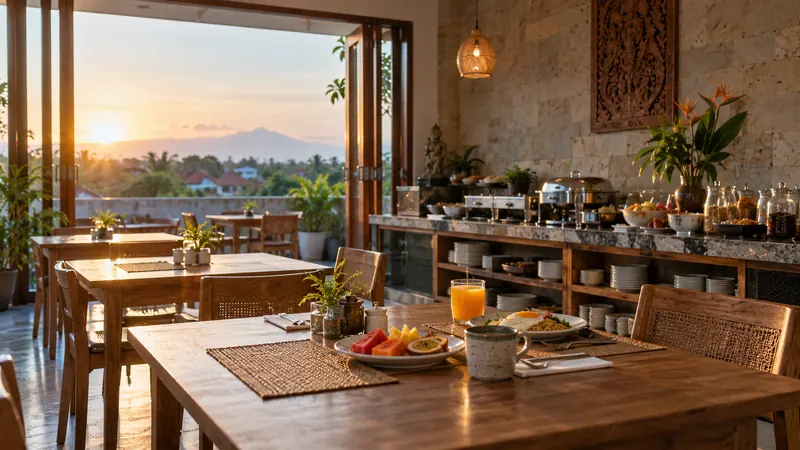
- Home-cooked breakfast.
- A quiet, family feel.
- A lower price than a hotel.
What it means for the owner
- You are the host, not just the landlord. Guests will ask you questions all day.
- Your home life and guest life mix. Set clear quiet hours and private areas.
- Running costs are low, but your time is the main cost.
What is a guest house?
A guest house is a building, or a group of rooms, used mainly for guests. The owner may live on the same land or nearby, but guests do not share the family's home.
Guest houses sit between homestays and hotels. They are simple and friendly, with more privacy than a homestay but fewer services than a hotel.
What guests expect at a guest house
- A private room and bathroom.
- Someone to help with check-in and questions, at least during the day.
- Breakfast, or a kitchen guests can use.
- A fair price.
What it means for the owner
- You need a small team, or very good systems, to cover check-ins, cleaning and messages.
- You can grow from five rooms to fifteen without big changes.
- Guests compare you with small hotels on booking sites, so photos and reviews matter.
What is a hotel?
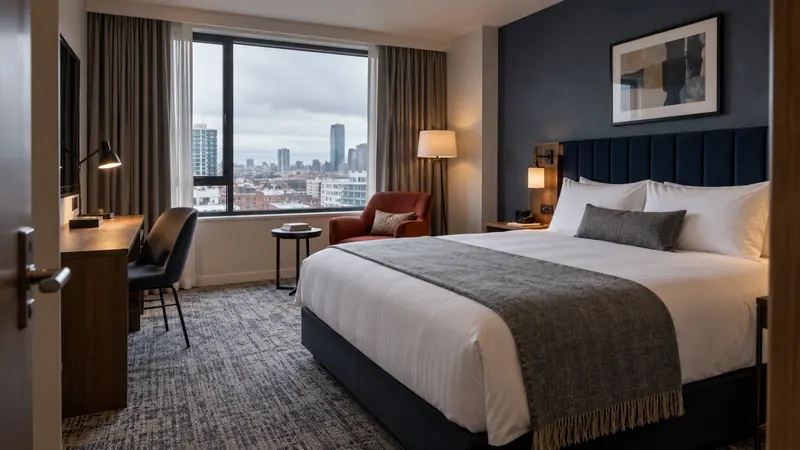
A hotel is a business built only for guests. It usually has more rooms, a front desk, set check-in times, housekeeping every day and staff on shifts. Many hotels also have a restaurant, a pool or a spa.
Hotels can be small. A boutique hotel with 15 rooms is still a hotel if it runs like one, with a front desk, daily housekeeping and clear service standards.
What it means for the owner
- More staff, more training and more rules.
- More rooms to sell, so you need a clear way to manage bookings from many channels.
- Higher costs, but also higher potential income.
Our guide to hotel room types (opens in new tab) explains how hotels describe their rooms on booking sites.
Homestay, guest house and hotel in Indonesia
In Indonesia, a business registers its activity with a code called KBLI (Klasifikasi Baku Lapangan Usaha Indonesia, the standard business classification). The code tells the government what kind of business you run. You register through OSS, the online business licensing system.
The KBLI codes were updated to a 2025 version. According to the official OSS KBLI conversion page (opens in new tab), the old code 55130, Pondok Wisata, changes to 55201, Aktivitas Rumah Tinggal Sewa (Homestay), in KBLI 2025. On the same site, the old code 55120 for non-star hotels changes to 55106, and the old code 55193 for villas changes to 55203.
| Type | Old KBLI | KBLI 2025 (from OSS) |
|---|
| Homestay (Pondok Wisata) | 55130 | 55201 |
| Non-star hotel | 55120 | 55106 |
| Villa | 55193 | 55203 |
| Star hotel | 55110 | Split by star class, check OSS |
A guest house does not always have its own code. Depending on how it runs, it may register as a non-star hotel or as a homestay. Check with OSS or a local licensing adviser before you choose.
New tourism business rules
The Ministry of Tourism issued Permenpar 6 of 2025 (opens in new tab) on 10 October 2025. It covers business standards, supervision and sanctions for risk-based licensing in tourism. It replaced earlier rules from 2021.
The rules for each type can differ, for example on the number of rooms, the facilities and the documents you need. These details change, so always check the current rules on OSS or with your local tourism office before you register or change type. This article is a general guide, not legal advice.
Tax
Hotels, homestays and villas in Indonesia may need to collect local hotel tax, depending on the region. Our guide to hotel tax in Indonesia (opens in new tab) explains the basics.
Other types you may hear about
Guests and owners also use other names. Here are the most common ones.
- Villa. A private house rented as a whole to one group. Often with a pool and garden. In KBLI 2025, the OSS site shows the villa code 55193 changing to 55203.
- Hostel. Shared dorm rooms and simple private rooms, mostly for young or budget travellers. The OSS site shows the youth hostel code 55191 changing to 55202.
- Apartment hotel. Apartments with hotel services, good for long stays. The OSS site shows code 55194 changing to 55204.
- Bed and breakfast. A term used in many countries for a small homestay or guest house that serves breakfast.
Running costs compared
Costs grow with service. A rough guide:
| Cost | Homestay | Guest house | Hotel |
|---|
| Staff | Mostly family | Small team | Full team on shifts |
| Cleaning | Family or one helper | One or two cleaners | Housekeeping team |
| Building upkeep | Part of the home | Separate rooms to maintain | Large building and facilities |
| Marketing | Reviews and word of mouth | Booking sites and reviews | Booking sites, website, agents |
| Software | Simple tools | A PMS helps | A PMS and channel manager are standard |
The table is a general pattern, not a rule. A busy homestay can need as much care as a small guest house.
How to choose the right type
Ask yourself these questions.
- Will you live on the property? If yes, and you want guests in your home, a homestay may suit you.
- How many rooms do you have? One to five rooms is homestay or small guest house size. Ten or more starts to look like a hotel.
- How much time can you give? A homestay needs your time. A hotel needs a team.
- What experience do you want to give? Family warmth, simple comfort, or full service?
- What do the rules allow? Check the right category and its requirements in your area.
A made-up example
A made-up family in Sidemen has a home with three spare rooms. They live in the main house, cook breakfast for guests and show them the rice fields. A homestay fits them well.
A few years later, they build six new rooms on the next plot, with a small reception. They no longer share their home with guests. Now a guest house, or a small non-star hotel, may be the better category. They check with OSS before changing.
Pricing and selling each type
Each type sells a little differently.
- Homestays sell the family and the local life. Photos of the host, the breakfast and the village help a lot.
- Guest houses sell value and comfort. Clean rooms, good reviews and a fair price win.
- Hotels sell consistency and service. Clear room types, good photos and fast answers matter.
All three can sell on booking sites and through direct bookings. Each booking site charges commission, so it helps to know the real cost of every channel. Our guide to OTA costs in Indonesia (opens in new tab) explains how to compare them.
What guests read on booking sites
Guests often filter by property type on booking sites. If you list the wrong type, the wrong guests find you. A family looking for a hotel with a pool and front desk may be unhappy at a quiet homestay. A traveller looking for a local family stay may skip a "hotel" listing.
Pick the type that matches how you really run. Then say it clearly in the first lines of your listing: who lives on site, what is included, and what kind of stay guests can expect.
House rules for each type
Clear house rules help guests know what to expect.
- Homestay. Quiet hours, shared spaces, family areas that are private, and respect for ceremonies.
- Guest house. Check-in times, visitors, smoking and noise.
- Hotel. Check-in and check-out times, deposits, pool hours and visitor rules.
Our guide to Airbnb house rules (opens in new tab) has wording you can adapt for any type.
Common mistakes when choosing a type
| Mistake | Better way |
|---|
| Calling a 12-room building a homestay | Match the name to how you really run it |
| Copying a hotel's prices for a homestay | Price for the experience you give |
| Promising daily cleaning you cannot staff | Promise only what your team can do |
| Not checking the business code | Check OSS or an adviser before you register |
| Using the same photos style for every type | Show what makes your type special |
How Kiyo helps homestays, guest houses and small hotels
Kiyo is a property management system (PMS) and channel manager for small hotels, villas and guesthouses. It suits a family homestay with a few rooms, and a growing guest house that has outgrown spreadsheets.
One calendar. Bookings from 75+ OTAs and your direct bookings land in one calendar, so you can see every room at a glance.
Direct bookings. A booking engine for your own website is in every plan.
Bahasa and English. The whole app works in Bahasa Indonesia, so family members and staff can use it easily.
WhatsApp support. Our team answers on WhatsApp from 07:00 to 19:00 WITA.
Our guide to what a hotel PMS is (opens in new tab) explains what a PMS does in simple words.
Plans start from Rp40k per room per month (opens in new tab). Free setup, pay from go-live, 14-day money-back guarantee.
Frequently asked questions
In a homestay, the owner or family lives in the same home as guests. In a guest house, guests stay in rooms used mainly for guests, and the owner may live nearby.
Usually, yes. Homestays have lower running costs and simpler service. But some special homestays charge more for a unique local experience.
According to the OSS conversion page, the old code 55130 (Pondok Wisata) changes to 55201 (Homestay) in KBLI 2025. Always check the current code on OSS before you register.
Yes. Many homestays sell on booking sites and through direct bookings. Check each site's rules and costs first.
When you no longer share your home with guests, or when you add many rooms and staff. Check the rules for the new category with OSS or an adviser.
 Add Kiyo to your preferred sources on Google